
The Incredible Placenta: Your Baby's Lifeline Throughout Pregnancy
Your body grows an entire organ just for your baby.
Take a minute to think about that.
The placenta is one of the most incredible things your body will ever create, yet it's something many of us don't think much about until after the baby is born.
As a midwife with Living Waters Midwifery, one of my favorite parts of prenatal care is helping families understand all the amazing things their bodies are doing during pregnancy. The placenta is one of my favorite topics because it's quietly working behind the scenes every single day to help your baby grow and thrive.
Whether you're planning a home birth in the Tampa Bay area or simply wanting to learn more about pregnancy, understanding the placenta is a great place to start.
When Does the Placenta Develop?
Believe it or not, your placenta begins forming very early in pregnancy, often before you even know you're expecting.
As soon as the embryo implants into the uterus, your body gets to work creating an entirely new organ whose only purpose is to support your growing baby.
During the first several weeks, another structure called the corpus luteum helps produce the hormones needed to support pregnancy. Around 10 to 12 weeks, the placenta takes over that job and continues producing many of the hormones that help your pregnancy stay healthy.
From that point on, the placenta continues growing and changing right alongside your baby.
What Does the Placenta Actually Do?
The easiest way to think about the placenta is that it's your baby's lifeline.
Since your baby isn't breathing air or eating food yet, the placenta does all of that work.
It delivers oxygen and nutrients to your baby.
It carries away waste products.
It produces hormones that help maintain your pregnancy.
It even passes antibodies from you to your baby to help support your baby's immune system before birth.
It's often described as your baby's lungs, kidneys, digestive system, and hormone-producing organ all rolled into one.
Where Is My Placenta?
One of the most common questions I hear after an anatomy ultrasound is,
"So... where's my placenta?"
Most of the time the answer is simply that it's exactly where we'd expect it to be.
Your placenta may attach to the front of your uterus (anterior), the back (posterior), near the top (fundal), or along one side (lateral). All of these locations are usually completely normal.
An anterior placenta can sometimes cushion your baby's movements early in pregnancy, so you may not feel kicks quite as soon as someone with a posterior placenta. That doesn't mean anything is wrong—it's simply a different location.
Occasionally, the placenta develops lower in the uterus near the cervix. Early in pregnancy this is often called a low-lying placenta. As the uterus grows, many low-lying placentas naturally move upward on their own, which is why we sometimes recommend a follow-up ultrasound later in pregnancy.
Why Do Some Moms Need Extra Monitoring Near the End of Pregnancy?
This is another question I hear often, especially from families who are approaching or have gone beyond their due date.
Like every organ in our body, the placenta changes as pregnancy progresses. As it matures, it's normal for it to begin showing signs of aging.
You may hear your provider mention placental calcifications on an ultrasound. That can sound scary, but small calcifications are often just a normal part of the placenta maturing.
When we recommend additional monitoring later in pregnancy, especially around or after 41 weeks or for certain medical conditions, we're not looking at one ultrasound finding by itself.
Instead, we're looking at the whole picture.
We're checking your baby's movements, breathing, muscle tone, amniotic fluid levels, and how the placenta appears to be functioning. The goal isn't to create unnecessary interventions. It's to gather information so we can continue supporting a healthy pregnancy while making thoughtful decisions together.
The Third Stage of Labor
Once your baby is born, there's still one more part of labor left: delivering the placenta.
This is called the third stage of labor.
Families have several options for how they'd like to approach this stage.
Some choose active management, where medication is given after birth to help the uterus contract and reduce the risk of heavy bleeding.
Others choose expectant, or physiologic, management, allowing the placenta to separate and deliver naturally on its own.
Some families also choose a lotus birth, where the umbilical cord isn't cut and the baby remains attached to the placenta until it naturally separates over the following days.
Another decision many families make is whether they'd like delayed cord clamping.
Delayed cord clamping allows blood to continue flowing from the placenta to your baby after birth. Research has shown this can improve newborn iron stores, reduce the risk of iron deficiency during infancy, and support a smoother transition to life outside the womb. The American College of Obstetricians and Gynecologists recommends waiting at least 30 to 60 seconds before clamping the cord in healthy newborns, while the World Health Organization recommends waiting at least one minute.
Some families choose to wait even longer, allowing their baby to remain attached to the placenta throughout the first golden hour while enjoying uninterrupted skin-to-skin contact and breastfeeding before the cord is clamped.
Here's another fun midwife fact.
The placenta doesn't always come out the same way.
Sometimes it separates from the center first. This is called a Schultze presentation, and bleeding often stays hidden until the placenta is delivered.
Other times it separates from the edge first. This is called a Duncan presentation, and bleeding is usually seen a little earlier. Neither is necessarily better or worse, but it's one of the many things your midwife is paying attention to during the third stage of labor.
What About Placenta Encapsulation?
One question I hear quite a bit is,
"What can I do with my placenta after birth?"
There are actually several options.
Some families choose to bury the placenta beneath a tree or in a special place. Others preserve placenta prints as artwork or save a small section of the umbilical cord as a keepsake.
Another option is placenta encapsulation.
Placenta encapsulation involves preparing the placenta after birth, usually by steaming, dehydrating, grinding it into a powder, and placing it into capsules that can be taken during the postpartum period.
Many mothers choose encapsulation because they feel it helps support their postpartum recovery, energy levels, milk supply, or mood. Like many aspects of pregnancy and birth, this is a personal decision. My role is to provide balanced, evidence-based information so families can choose what feels right for them.
Every Placenta Tells a Story
One of my favorite moments after every birth is taking a few minutes to examine the placenta with families.
Its size, shape, cord insertion, membranes, and overall appearance often tell the story of the pregnancy. It's one more reminder of just how incredible the human body really is.
At Living Waters Midwifery, I believe education is one of the most important parts of prenatal care. My goal is to help you understand what’s happening in your body so you can make informed, confident decisions throughout pregnancy, birth, and postpartum.
Whether you’re planning a home birth in the Tampa Bay area or a hospital birth and would love personalized prenatal and postpartum care in the comfort of your own home, I’d love to connect with you.
Schedule a free phone consultation to learn more about Living Waters Midwifery and the care options available to you:
Book a Free Phone Consultation
References
American College of Obstetricians and Gynecologists. Committee Opinion No. 814. Delayed Umbilical Cord Clamping After Birth. Reaffirmed 2023.
World Health Organization. Delayed Umbilical Cord Clamping for Improved Maternal and Infant Health and Nutrition Outcomes. 2014
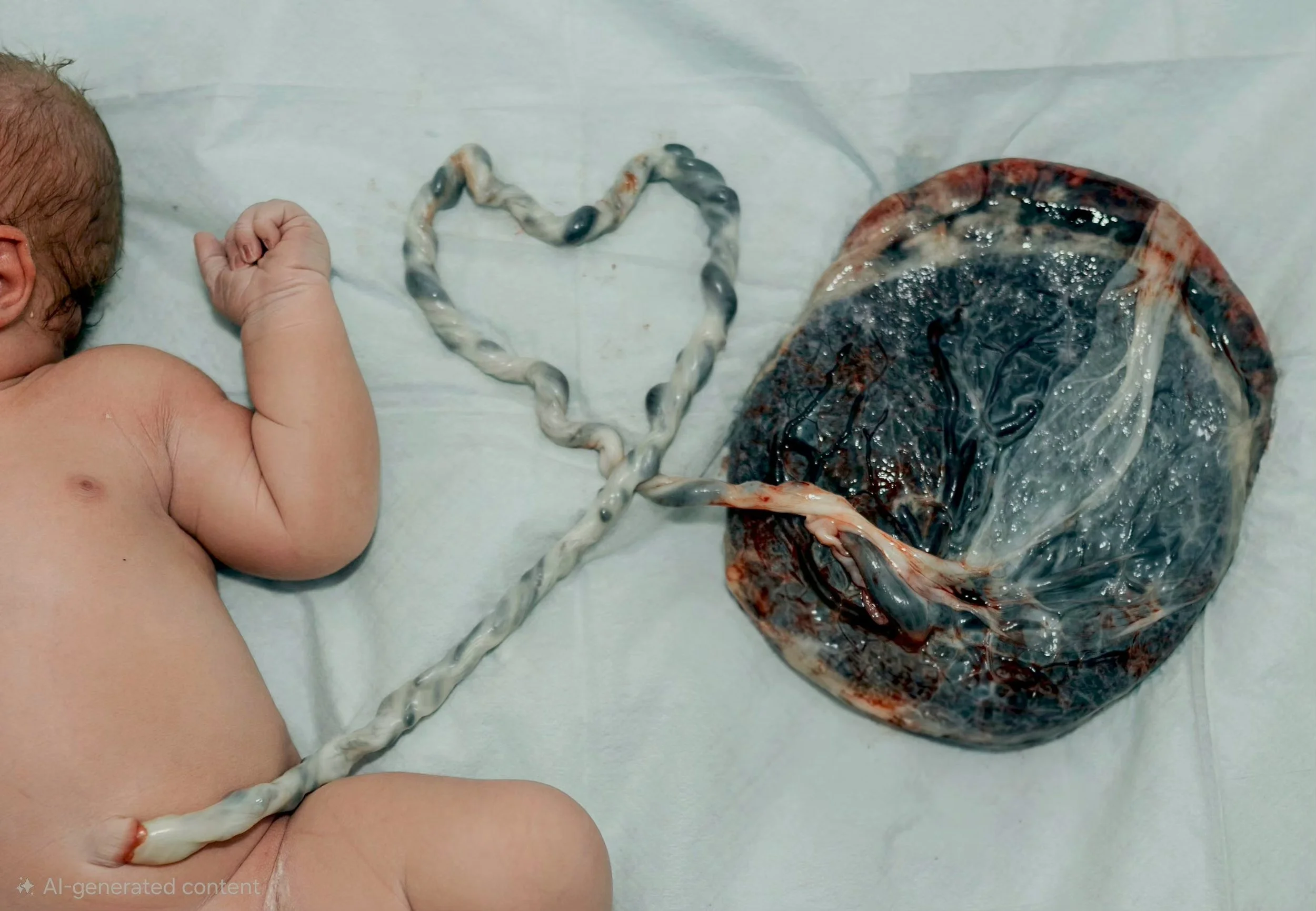
Images By Melanie Amparo Photography
