Your Hormones Aren’t the Enemy

Understanding your cycle, your hormones, and the rhythms that make you, you.
Hormones are an essential part of our lives. They ebb and flow the way seasons do. They can be influenced by our lifestyle, diet, genetics, exercise, sleep, environment... so many things!
And somewhere along the way, hormones got a pretty bad reputation.
Tired? Hormones.
Moody? Hormones.
Can't sleep? Hormones.
Don't want your husband anywhere near you? Definitely hormones. Haha.
But our hormones aren't the enemy. They are constantly communicating with the rest of our body, and learning to recognize some of those patterns can tell us quite a bit about what may be going on underneath the surface.
I am trained in integrative gynecology and fascinated by functional medicine in the realm of women's health. One of my favorite things is teaching women about their hormones, what they do, how they function, and how our everyday lives can support a healthy balance.
So let's start with some low-hanging fruit.
Your period.
Your period is more than just... your period
A menstrual cycle is just that. A cycle. Think of a circle.
We tend to pay attention to the bleeding portion because, well... it's hard NOT to notice that part.
But what about all those days in between?
Those don't matter, right?
Wrong!!
So wrong!
Your menstrual cycle can give us a lot of information about your overall health. How often you're bleeding, how long you're bleeding, whether you're ovulating, pain, spotting, changes in flow, and symptoms throughout the month can all give us clues about what's happening in your body.
And your cycle is not just the days you're bleeding. We count it from the first day of one period to the first day of the next.
The cycle is broken into two main phases, the follicular phase and the luteal phase, with ovulation sitting right there between them.
Ahhh... the follicular phase
We all love the follicular phase, whether you've realized it or not.
Your period has come. You suddenly realize why you were a tad cranky or tearful last week. The not-so-fun bleeding part finally ends and then...
Hello!
You may feel more energetic. More social. More confident. More motivated.
Maybe you can conquer the world!
As follicles in the ovary develop, estrogen generally rises. Eventually one follicle becomes dominant and, when everything lines up just right, we get a surge of luteinizing hormone, or LH, that helps trigger ovulation.
And somewhere around that fertile window, you may notice a little spike in libido too.
Convenient, huh?
If you're using fertility awareness either to achieve or avoid pregnancy, this is why understanding your fertile window matters. And no, that window is not automatically “day 14” for every woman.
Bodies did not read the textbook.
Then comes the luteal phase...
After ovulation, we enter the luteal phase.
The follicle that released the egg transforms into something called the corpus luteum and begins producing progesterone.
Progesterone is pretty important here. It helps prepare and maintain the uterine lining in case pregnancy occurs.
If pregnancy doesn't happen, estrogen and progesterone eventually fall and...
Hello again, period.
And around we go.
This is also the part of the cycle when some women begin to feel different.
Maybe you're a little more tired. Maybe your breasts are tender. Maybe you're hungrier. Maybe you want everyone to please stop chewing so loudly.
Some premenstrual changes can be completely normal. But feeling absolutely miserable for a significant portion of every month isn't something you should automatically shrug off as, “Well, I'm a woman. Hormones.”
PMS and PMDD are real conditions, and symptoms that interfere with your everyday life deserve a conversation.
Who is running this show anyway?
There are several major players behind this whole production.
Estrogen helps regulate the menstrual cycle and has effects far beyond reproduction, including our bones, brain, cardiovascular system, and other tissues.
Progesterone rises after ovulation and helps prepare the uterine lining for a possible pregnancy.
Follicle-stimulating hormone, or FSH, helps follicles in the ovaries develop.
Luteinizing hormone, or LH, helps trigger ovulation.
And then there's gonadotropin-releasing hormone, or GnRH.
GnRH comes from the hypothalamus in your brain and essentially tells the pituitary, “Hey, we have work to do down there,” prompting the release of FSH and LH.
So when we talk about “hormone balance,” we're really talking about a whole communication system involving your brain, ovaries, and the rest of your body.
Pretty cool, right?
So how do we support our hormones?
This is where I really love integrative women's health.
Before jumping immediately to a pill or supplement, I like to zoom out.
How are you sleeping?
How are you eating?
Are you moving your body?
How much stress are you carrying?
What does your menstrual cycle actually look like?
What symptoms are you experiencing, and when are you experiencing them?
Because all of this matters.
Regular exercise, adequate sleep, good nutrition, and stress reduction aren't particularly glamorous recommendations, but they can genuinely matter for menstrual and premenstrual health. Exercise, sleep, relaxation techniques, and dietary changes are among the lifestyle approaches ACOG discusses for managing PMS symptoms.
Nutrition matters too. Rather than obsessing over a single “hormone-balancing” food, I tend to favor an overall nutrient-dense, anti-inflammatory pattern with plenty of vegetables, fiber, healthy fats, and whole foods.
Your liver and digestive system also participate in how hormones are metabolized and eliminated, which is another reason that our overall health matters when we're talking about hormones.
And then there is our environment.
Yep... our environment matters too
You may have heard the term “endocrine disruptor.”
Endocrine-disrupting chemicals, or EDCs, are substances that can interfere with the way our hormones work. They can be found in some plastics, pesticides, cosmetics, fragrances, food-contact materials, and other everyday products.
Does this mean you need to throw everything in your house away and live in a glass bubble?
Please don't.
This is not about fear.
It is about making reasonable changes where you can.
Maybe that means using glass or stainless steel for food storage more often, avoiding heating food in plastic, choosing fragrance-free products when it makes sense, or simply becoming more aware of what you're bringing into your home.
You will never eliminate every exposure, nor do you need to make yourself crazy trying. The goal is reducing unnecessary exposures where it's practical. The Endocrine Society similarly recommends informed, practical steps to reduce preventable EDC exposure.
Your hormones aren't the enemy
They're messengers.
They change throughout the month. They change during pregnancy. They change postpartum. They change as we move toward perimenopause and menopause.
They're supposed to change.
Instead of fighting our bodies, I want women to understand them.
Learn your cycle. Pay attention to patterns. Notice when something changes. Ask questions.
And when something doesn't feel right, find a provider who is willing to look at the whole picture with you.
Because sometimes your body isn't betraying you.
It might just be asking you to listen.
Let’s Talk About Baby’s Position
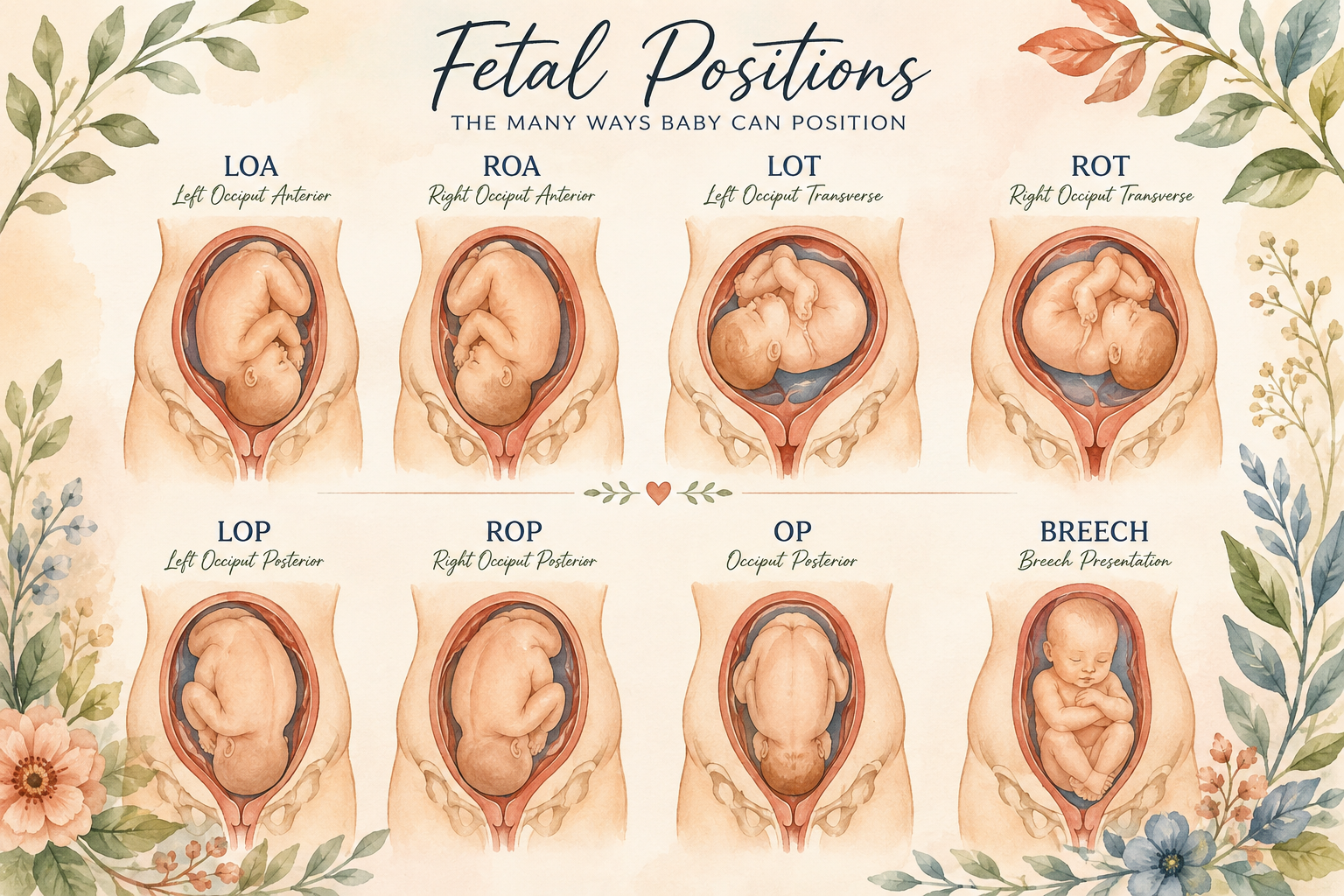
Because head down is only part of the story
LOA, ROA, ROT, LOT, OP, LOP, ROP, breech…. oh my!
Okay, let’s take a breath. Inhale... exhale...
Where is this baby, and what does any of this mean?
These babies can have a mind of their own. But our babies and bodies are also pretty intelligent. So let’s jump into what all of these positions mean, why we care about them, and some things you can do to encourage baby into a good position for birth.
Head Down... But Where Is Baby Looking?
“Head down” is typically what most women, and honestly some providers, seem to be most concerned about.
But there is so much more to it!
Once baby is head down, we can also talk about which direction baby is facing and where their back is positioned in relation to your pelvis.
I am a lover of Spinning Babies, so you'll hear some of their philosophy woven into how I talk about positioning. I highly recommend checking out their resources if you want to learn more about fetal positioning, belly mapping, and maternal movement during pregnancy and labor.
When you see your midwife, they will most likely start doing something called Leopold's maneuvers once baby is a little bigger, often somewhere around the third trimester.
This is when you see us feeling around your belly trying to answer all of our questions.
Where is the head? Where is the bottom? Where is the back? How low is baby? How high is baby? What on earth is this little lump I'm feeling over here?
We are basically trying to map your baby from the outside.
And yes, I love a good LOA. Every midwife does.
But some babies do not care what I love.
Little stinkers.
LOA and ROA
LOA means Left Occiput Anterior.
In normal-person language, baby is head down, with the back of baby's head toward the left-front side of mom's pelvis and baby's back generally along mom's left side.
This is often considered a very favorable position for labor because it can allow baby to navigate the curves of the pelvis nicely.
But what if baby is ROA?
Right Occiput Anterior.
Same basic idea, but baby is hanging out more toward mom's right side.
Are we panicking?
Nope!
ROA can also be a perfectly workable position for labor. And here's something really important to remember throughout this entire conversation: babies move.
The position your baby is in at your prenatal appointment is not necessarily the position they will be in when labor begins, and babies continue rotating and adjusting as they move through the pelvis during labor.
So please don't go home from your appointment thinking, “MY BABY IS ROA! EVERYTHING IS RUINED!”
It's not.
What About ROT and LOT?
Sometimes baby's back is more toward your side.
ROT means Right Occiput Transverse and LOT means Left Occiput Transverse.
These babies are basically hanging out sideways while still being head down.
You may hear your midwife talk about encouraging movement or positioning to give baby plenty of room to rotate and descend.
And this is where I really like movement.
Walking, changing positions, getting off the couch, using a birth ball, moving your hips, and generally giving your pelvis opportunities to move can all be useful. During labor, frequent position changes can also be great for comfort and may help baby find their way through the pelvis.
Sometimes babies just need a little room to figure things out.
OP, LOP and ROP... Hello, Back Labor
Then we have posterior babies.
OP means Occiput Posterior. LOP and ROP tell us whether baby is positioned more toward mom's left or right while facing toward her front, leaving baby's back closer to mom's back.
This is where you may have heard the infamous words...
Back labor.
Posterior does not automatically mean something is wrong, and it doesn't mean baby cannot be born vaginally. Babies can rotate during labor, and sometimes a posterior position is simply part of how that particular baby navigates that particular pelvis.
But posterior positions can sometimes be associated with more back discomfort or a longer labor.
This is where movement and position changes can become really helpful.
I often point families toward Spinning Babies techniques, and depending on the individual situation, some women also choose to work with pelvic floor physical therapy or other supportive providers during pregnancy.
The goal isn't to bully baby into the position we have decided is “perfect.”
We're trying to create space and support movement.
And Then There's Breech...
Dun dun dun!
Breech means baby's head is up instead of down. Depending on the type of breech presentation, baby's bottom, feet, or both may be closest to the cervix.
First of all, if your baby is breech earlier in pregnancy, breathe.
Babies move around a lot, and many will turn head down on their own before term.
When baby remains breech later in pregnancy, though, that's when we start having more conversations.
Why is baby breech?
Sometimes we know there may be a contributing factor. And sometimes?
We don't know.
Baby just chose breech.
I personally like to start talking more seriously about positioning and options as we get into those later weeks. Some families explore movement and positioning techniques and may also choose supportive care such as pelvic floor therapy, prenatal massage, acupuncture, or chiropractic care.
The important thing is that we're not trying to force anything.
We're looking at the whole picture, giving baby opportunities to move, and continuing to reassess.
If baby is still breech as we approach term, another option may be a consultation with an OB/GYN to discuss an external cephalic version, or ECV.
An ECV is a procedure where an obstetric provider attempts to turn baby from the outside of your abdomen while you and baby are closely monitored. It isn't appropriate for everyone, it isn't always successful, and it has risks and benefits that deserve an actual conversation with the provider performing it.
And what about vaginal breech birth?
This is where things get complicated.
There are providers with specialized training and experience in vaginal breech birth, although finding one can be difficult depending on where you live and your individual circumstances.
If this is something you are interested in exploring, do your research and have detailed conversations with appropriately trained providers about your individual risks, benefits, and options.
Breech Without Borders is one resource I recommend for families who want to learn more.
So... Where Is Your Baby?
Your baby has a lot of positioning options!
And I think one of the most important things to remember is that fetal position is not a grade on your pregnancy.
You did not “fail” because your baby is posterior.
You did not do something wrong because your baby prefers your right side.
And you don't need to spend your entire third trimester obsessively trying to achieve the perfect LOA baby.
Learn about your body.
Learn about your baby.
Try belly mapping. Move your body. Give your pelvis opportunities to move. Ask your midwife what they're feeling when they do Leopold's instead of just letting us poke around your belly in silence!
And remember that babies are active participants in birth, too.
Sometimes they're saying, “Hey! I need a little more room over here.”
And sometimes they're saying, “Hmm... my head fits pretty well like this. Leave me be!”
Our job isn't always to dictate exactly where baby should be.
Sometimes it's simply to create space, pay attention, and let baby find their way.
If you want to nerd out about fetal positioning after this Coffee Chat, Spinning Babies has tons of resources on fetal position, belly mapping, pregnancy movement, and labor positions.
And if you're navigating a breech pregnancy and want to understand more about your options, Breech Without Borders also has educational resources for parents.
Happy baby mapping!
Your Annual Exam Is More Than a Pap Smear

Taking the dread out of your annual visit and putting the focus back where it belongs... on you.
It’s time for your annual gyn appointment. The appointment no woman really looks forward to.
I know, trust me. As a midwife, I am the worst patient! I will try to avoid this at all costs. But should we really avoid these visits?
Let’s talk about why these nuisance annual exams exist in the first place.
Let’s set the scene.
It’s 8 a.m. You have the dreaded gyn appointment at 11 today.
Okay, I need to shower, shave... Where is my nice underwear? Why does this sock have a hole in it? Do I need socks? What bra do I wear?
These are the questions on most women’s minds the morning of the appointment. And then, of course, there’s the dreaded pelvic exam and Pap smear.
I promise your gyn provider does not need you to get all gussied up before your appointment, haha. It is nice that you think of us, though! But we absolutely are not judging you.
So, about that Pap smear...
Did you know that you probably don't need one every year?
For women at average risk, Pap smears are recommended every three years from ages 21–29. From ages 30–65, you have a few options: a Pap every three years, high-risk HPV testing every five years, or both together every five years.
That's it. We don't need to go down a cervical cancer screening rabbit hole today.
But has your provider ever actually talked to you about what a Pap smear is screening for?
A Pap smear looks for abnormal cells on your cervix. HPV testing looks for high-risk types of HPV that can cause those abnormal changes. HPV is responsible for the vast majority of cervical cancers, and cervical cancer, when caught early, is highly treatable.
That is the reason we're doing this. Not because we enjoy making you put your feet in stirrups!
Can you turn down a Pap smear?
Absolutely!
This is about informed choice, not forced choice or coercion. Make sure you understand why a test is being recommended, ask all of your questions, and make the decision that feels right for you.
So is the annual exam just about a Pap smear?
Why do I need to go yearly if the Pap smear isn't even yearly?
Great question!
We are made up of more than just our cervix!!
An annual exam is a great time to talk about your hormones, life, period issues, sexual health, mental health, nutrition, exercise, and breast health. It is also a great time to check up on any blood work or preventive screenings that may need monitoring.
Maybe your periods have suddenly gotten heavier. Maybe sex has become uncomfortable. Maybe your libido has disappeared and you'd really like to know where it went. Maybe you're wondering about birth control, trying to get pregnant, or wondering if these weird changes you've noticed could possibly be perimenopause.
This is the time to focus on you, your health and wellness, and how you're actually feeling.
Some visits can feel rushed, and that is why it is important to find a provider who spends time with you and listens.
Sometimes it can feel like the appointment was just to do a Pap and breast exam and send you on your way.
But it should not be this way.
Our whole health needs to be taken into consideration, so be mindful when choosing your gynecologic provider.
Pelvic exams... we hate them... right?
Well, the good news is there isn't great evidence to support doing a routine internal pelvic exam at every visit when you aren't having any concerning symptoms.
It is pretty unavoidable with a traditional Pap smear, yes. Although, if this part of the exam is particularly difficult for you, you can even talk with your provider about whether they would be comfortable letting you insert your own speculum.
But a pelvic exam without any symptoms or another reason for doing one often doesn't tell your provider very much.
You have every right to turn it down if skipping it isn't offered to you.
If you do have concerns though, like abnormal cycles, painful periods, heavy bleeding, abnormal discharge, pain with intercourse, or pelvic pain, a pelvic exam can often be one puzzle piece in the bigger picture.
And please ask questions!
“Why do you recommend this?”
“Will this help you in any way to make a plan of care for me?”
You are allowed to understand why someone is examining your body before agreeing to it.
An annual is more than a Pap smear!
It is about taking care of your whole self.
I know we dread it, but take the time out of your schedule and be thankful to your body by getting a checkup.
And remember, you do not have to shave. We don't care about your underwear. We don't care if your socks match.
We care about you.
This appointment should be about your health, your wellness, understanding how your body works, and helping you be the best version of yourself.
So make the appointment you've been avoiding.
And yes... I'm talking to myself here, too. 😂
If you're looking for a different kind of women's healthcare, Living Waters Midwifery offers annual wellness exams, cervical cancer screening, and problem-focused gynecologic care in the comfort and privacy of your own home.
Learn more about our women's health services or connect with us through Living Waters Midwifery.
The Innate Wisdom of Birth
What a blessing it was to be part of this beautiful experience.
This was the second time I had the privilege of witnessing the miracle of birth with this wonderful family, and this one was incredibly special.
Sometimes, in the world of modern obstetrics, I think we can lose sight of the beauty of birth. Not only as parents, but as birth workers and providers, too.
It is good to step back sometimes and simply witness what the human body knows how to do.
There is an incredible intelligence to physiologic birth. A mother listening to her body. Moving when she needs to move. Resting when she needs to rest. Reaching for support when she needs it. And a birth team that knows when to step in, but also knows when to step back.
It is okay to trust your body.
And as a birth worker, it is okay to trust your instincts while remembering that the woman in front of you has an innate ability to birth her baby. Our presence does not always need to mean intervention.
This mama welcomed her baby boy into the world in the water, in her own home, surrounded by people she trusted. She trusted what she was feeling. She trusted her body. And just as importantly, she trusted the team she invited into her space to watch over both of them.
Birth is messy. It is unpredictable. It does not always follow the plan we imagined, and sometimes intervention is absolutely necessary.
But birth does not automatically become dangerous simply because we allow it to unfold.
Every labor does not need to be managed as though something is about to go wrong. Sometimes our job is to watch, listen, assess, encourage, protect the space, and be ready if we are needed.
Births like this remind me why I became a midwife.
To be with woman.
Not to tell her how to birth.
Not to tell her what she should be feeling.
Not to make her birth fit within the boundaries of what makes me most comfortable.
But to sit beside her.
To support her. To encourage her. To protect her autonomy. To remind her of her strength when she forgets it.
And to be her safety net if and when she needs one.
There is something incredibly humbling about being invited into someone's home and trusted with something this intimate.
This is midwifery.
And I am so grateful I get to do it.

Image By - Melanie Amparo Photography
Coffee Chat ☕
What Do You Wish You Knew Before Your First Home Birth?
If we were sitting down over a cup of coffee and you told me this was your first baby, there are a few things I'd want you to know before labor ever begins.
The first? Your body was designed for this. That doesn't mean birth is always easy. It doesn't mean labor won't challenge you. It simply means that, for healthy, low-risk women, your body already knows so much more than you think it does.
One of the hardest parts of labor isn't usually your body. It's your brain. We spend so much of our lives analyzing, planning, researching, and trying to stay in control. Labor asks you to do almost the opposite. It asks you to let go of your analytical brain and trust the instincts your body was created with.
I always tell my clients that labor isn't something you have to "perform." It's something you experience. Your job isn't to have the perfect birth. Your job is to let your body do what it already knows how to do while surrounding yourself with people who believe in you.
Here's something else I wish every first-time mom knew... It's okay to take up space. If you don't like people rubbing your belly, you can say so. If the constant texts asking, "Is the baby here yet?" are making you anxious, it's perfectly okay to keep your due date private or simply tell people your due month instead. If you only want your partner, your birth team, or a few specific people at your birth, that's okay too. Birth is one of the most intimate days of your life, and you don't have to invite people because you feel guilty. You get to choose who shares that space with you.
And when labor begins... Move. If your body wants to sway, sway. If you want to get in the shower, get in the shower. If getting on your hands and knees feels right, trust that instinct. If you need counterpressure, ask for it. If you want the birth pool, climb in. If you need everyone in the room to be quiet for a while... Tell us.
You are never going to hurt my feelings by telling me what you need. In fact, I celebrate it.
One of the things I love most about home birth is watching women become more confident as labor unfolds. Some start labor quietly wondering, Can I really do this? Then something shifts. They stop asking for permission. They stop worrying about what labor is "supposed" to look like. They start listening to their bodies instead. And it's incredible to witness.
Will labor always go exactly how you imagined? Probably not. Birth has a way of surprising all of us. But trusting your body doesn't mean believing everything will go perfectly. It means believing that, whatever the day brings, you'll have a team beside you to support you, encourage you, and help you make informed decisions along the way.
That's what I hope every family experiences. Not a perfect birth. A birth where they felt heard. Respected. Supported. Safe. And free to be completely themselves.
If you're considering a home birth and wondering whether it's the right fit for your family, I'd love to sit down, answer your questions, and simply talk through your options.
No pressure. No expectations. Just a conversation.
Learn more about Living Waters Midwifery or schedule your free consultation here:
https://www.livingwatersmidwiferyfl.com/contact
Coffee Chat ☕
Let's Talk About Cervical Checks
There's one thing I jokingly call "curiosity checks."
Cervical exams during pregnancy. That usually gets a laugh, but there's actually a reason behind it.
As you get closer to your due date, it's common for friends and family to ask, "So... are you dilated yet?" Somewhere along the way, we've been taught that knowing how many centimeters dilated we are tells us when labor is going to begin. I wish it were that simple.
Here's the thing... a cervical exam doesn't predict when labor is going to start.
Let's imagine two different scenarios.
You're 40 weeks pregnant. You haven't had a single contraction. We do a cervical exam, and I tell you your cervix is completely closed. Now what?
For a lot of moms, that information creates stress. Suddenly they're wondering if their body is doing what it's supposed to do or if they're "behind."
Now let's flip it around.
You're also 40 weeks. Still no contractions. This time I tell you you're already 5 centimeters dilated. Well... now you're wondering why you aren't in labor yet! Should you be timing every little cramp? Is baby coming today? Can you even go to sleep tonight?
See what happened? Neither answer actually told us when labor would begin.
Some women walk around several centimeters dilated for days or even weeks. Others go from completely closed to holding their baby just a few hours later.
That's why I don't recommend routine cervical exams during pregnancy without a good reason, like if you think your water has broken or there's another concern we need to evaluate.
My goal is never to create unnecessary anxiety just to satisfy our curiosity. Now, does that mean I won't do a cervical exam during pregnancy?
Not at all.
If we've talked through the pros and cons and you still feel like having one would be helpful, we'll absolutely have that conversation. This is your pregnancy, and shared decision-making is a huge part of how I practice. My job is to give you the information you need so you can decide what's best for you. Labor is a little different.
When I first arrive at your home, I usually recommend a cervical exam because it gives me a starting point. But even then, I'm not just trying to figure out how many centimeters you're dilated. I'm feeling how thin your cervix is. Where your cervix is positioned. Where baby's head is in relation to your pelvis. Whether there's any swelling.
All of those things help me understand how labor is progressing and guide any recommendations I make along the way. But even then... it's not black and white.
If I walk through your front door and you're grunting, your body is bearing down, and I'm seeing all the outward signs that your baby is making great progress, I may not recommend a cervical exam at all. Sometimes your body tells me everything I need to know.
As labor continues, I may offer another cervical exam every 4 to 6 hours if labor seems to be progressing more slowly than expected or if you're asking for one. Again, it's never about checking a box. It's about gathering information that helps us make good decisions together.
When it comes time to push, I don't automatically reach for a glove either. Most women experience what's called the fetal ejection reflex, that overwhelming urge to push that's almost impossible to ignore.
If I'm seeing your body opening beautifully, baby's head beginning to crown, or other outward signs that everything is progressing normally, another cervical exam usually isn't necessary.
If you've been pushing for a while without much progress, I'm seeing bleeding that concerns me, or something just doesn't seem to fit the picture, I'll recommend checking.
Sometimes babies are just a little too eager and trigger that urge to push before the cervix is completely dilated. A cervical exam in that situation can give us helpful information and guide our next steps.
One thing you'll probably notice if you choose me as your midwife is that I don't recommend procedures just because "that's what we always do." I like to know why we're doing something. More importantly, I want you to know why.
Sometimes a cervical exam gives us valuable information. Sometimes it simply satisfies our curiosity. Knowing the difference is part of good midwifery.
If you're considering a home birth and have questions about prenatal care, labor, or simply want a provider who takes the time to explain the "why" behind recommendations, I'd love to chat.
No pressure. No expectations. Just a conversation.
Learn more about Living Waters Midwifery or schedule a free consultation here:
https://www.livingwatersmidwiferyfl.com/contact
Coffee Chat ☕
Can I Still Have a Home Birth If I Have Gestational Diabetes?
This is a question I get asked quite a bit, and the short answer is...
Maybe!
Like many things in pregnancy, the answer isn't simply yes or no. It depends on what type of gestational diabetes you have and how well your blood sugar levels are controlled.
Let's start from the beginning.
One of the reasons we spend so much time getting to know your health history during your first prenatal visit is because some women have risk factors that make us want to screen for diabetes earlier in pregnancy. If those risk factors aren't present, we typically screen everyone around 28 weeks.
If you're diagnosed with gestational diabetes, don't panic.
I know those words can feel overwhelming, but many women go on to have healthy pregnancies and beautiful home births.
There are two types of gestational diabetes you'll often hear us talk about.
GDMA1 means your blood sugar levels are well controlled with diet and lifestyle changes.
GDMA2 means your blood sugar levels require medication to stay in a healthy range.
That distinction is really important.
If your gestational diabetes is diet controlled (GDMA1), you're often still a great candidate for home birth.
We'll ask you to monitor your blood sugar four times a day so we can make sure those numbers stay where we'd like them to be. We'll also talk about nutrition, and I highly recommend meeting with a nutritionist who has experience working with gestational diabetes. Small changes can make a big difference.
The goal is healthy blood sugar levels, not perfection.
So why does medication change things?
Here's where understanding the "why" becomes important.
When Mom's blood sugar levels are consistently high during pregnancy, baby responds by making more insulin. After birth, baby's body doesn't immediately know that the sugar supply from Mom has stopped. That means baby may continue producing extra insulin for a little while, which can cause low blood sugar after delivery.
When gestational diabetes is well controlled with diet, this risk is much lower. We still recommend checking baby's blood sugar about one hour after their first feeding to make sure they're transitioning well, but this can often be done while remaining at home.
If blood sugar levels can't be controlled with diet alone and medication becomes necessary, that's when I recommend consulting with Maternal-Fetal Medicine (MFM). Medication-managed gestational diabetes (GDMA2) changes the level of monitoring both Mom and baby need, and at that point I recommend planning for a hospital birth.
Sometimes families are disappointed to hear that.
And I understand why.
But one thing I always tell my clients is that recommendations aren't about taking something away from you. They're about making sure you and your little one are in the safest place for your particular pregnancy.
Every recommendation I make comes back to the same question:
"What is the safest plan for Mom and baby?"
Sometimes that's a home birth.
Sometimes it's a hospital birth.
Neither one is a failure.
The goal has never been home birth at all costs.
The goal is a healthy Mom, a healthy baby, and making decisions together based on the information we have.
If you've recently been diagnosed with gestational diabetes and you're wondering what that means for your birth plan, don't be afraid to ask questions. Every pregnancy is different, and every family deserves to understand their options.
Sometimes the diagnosis sounds much scarier than the reality.
Sometimes it simply means we adjust the plan together.
Either way, you don't have to navigate it alone.
If you're considering a home birth in the Tampa Bay area or have questions about gestational diabetes and whether you're still a candidate for home birth, I'd love to talk.
You can reach me here:
https://www.livingwatersmidwiferyfl.com/contact
Coffee Chat ☕
What Happens If There's an Emergency During a Home Birth? *Trigger Warning - Hemorrhage and Neonatal Resucitation discussed in this blog*
This is probably one of the first questions families ask me: "What happens if something goes wrong?"
First, I'm really glad you asked. It's an important question, and honestly, it's one that every family considering a home birth should ask.
One of the biggest misconceptions about home birth is that we simply show up hoping everything goes smoothly. That couldn't be further from the truth. We spend a lot of time preparing for emergencies, even though we hope we'll never need those skills.
Let's start by talking about Mom.
One thing I always tell my clients is that healthy, low-risk women usually do really well in labor. Our bodies are designed for birth. But birth can also be unpredictable, and that's exactly why we prepare.
If there is an emergency during labor, our first priority is stabilizing both mom and baby while baby is still in utero. Once everyone is stable, we'll call 911 and begin transfer to the nearest hospital. Either your midwife or another member of your birth team will go with you. You will never be alone through that process.
One of the most common concerns families have is postpartum hemorrhage. The good news is that we don't just recognize hemorrhage, we can begin treating it immediately. We carry emergency medications including Pitocin, Cytotec, Methergine, and TXA. We can also start an IV, give fluids, and closely monitor how you're responding.
Another thing many people don't realize is that we don't estimate blood loss. We actually weigh it. That gives us a much more accurate picture of what's happening so we're making decisions based on facts instead of guessing.
Many postpartum hemorrhages respond well to treatment right at home. If your bleeding continues despite treatment, you're showing symptoms of significant blood loss, or we feel you need additional resources only available in the hospital, we'll call 911 and continue caring for you until EMS arrives. Again, someone from your birth team will stay with you throughout the transfer.
Now let's talk about baby.
Every member of our birth team is certified in Neonatal Resuscitation (NRP), and we regularly train for newborn emergencies. Thankfully, most babies transition beautifully after birth. Occasionally, though, a little one just needs a little extra help figuring out life outside the womb.
If that's the case, we're prepared. We have the equipment to suction baby's airway when appropriate and provide breathing support with a T-piece resuscitator if it's needed.
Many babies simply need a little extra time and support before they settle in. If baby responds well, we'll continue monitoring closely for the first four hours after birth and, depending on the situation, may recommend overnight observation at the hospital.
If baby isn't responding the way we'd like after our initial interventions, we don't wait. We'll call 911, continue caring for baby while EMS is on the way, and go with your family to the hospital.
At the end of the day, I hope this gives you peace of mind. Planning a home birth isn't about pretending emergencies never happen. It's about planning for them.
We talk through emergency scenarios during your prenatal visits long before labor begins because I want you to know exactly what our plan is. The goal has never been to avoid the hospital at all costs. The goal is a healthy mom, a healthy baby, and making sure you're in the right place if additional care is ever needed.
I hope you never need any of these interventions. Most families don't. But knowing your midwife is prepared, carries emergency medications and equipment, and has a clear plan if something unexpected happens can make all the difference.
If you're considering a home birth in the Tampa Bay area and have questions about safety, emergency planning, or whether home birth is the right fit for you, I'd love to talk. Sometimes the best place to start is simply asking questions.
You can reach me here:
https://www.livingwatersmidwiferyfl.com/contact
Coffee Chat ☕
What Really Happens During a Home Birth Prenatal Visit?
One of the questions I get asked all the time is, "So... what actually happens during a prenatal visit?"
Honestly? We talk. A lot.
Sure, we'll listen to your baby's heartbeat and make sure everything is looking good, but those things only take a few minutes. The rest of our time is spent talking about you, your baby, your family, and whatever is on your mind that day.
One of my favorite parts about home birth midwifery is that I come to your home. There's no rushing out the door, sitting in a waiting room, or trying to squeeze everything into a short appointment before someone knocks on the exam room door. Instead, I come to you.
Sometimes we're sitting at your kitchen table. Sometimes we're on the couch. Sometimes there's a toddler showing me every toy they own while we're trying to listen to baby's heartbeat. And honestly... I wouldn't have it any other way.
I plan for at least an hour at every visit. Not because every appointment needs a full hour, but because I never want you to feel like you have to choose which questions are worth asking.
If you've had blood work or an ultrasound since I saw you last, we'll pull everything up together and go over it. We'll talk about what the results actually mean, not just whether they're "normal." I want you to leave understanding your pregnancy, not wondering what your portal is trying to tell you.
Every visit also includes listening to your baby's heartbeat, checking your blood pressure, and, after about 20 weeks, measuring your belly to make sure baby is growing right on track.
But if I'm being honest, those aren't usually the parts families remember.
They remember finally having enough time to ask every question they've been saving all week. They remember talking through birth preferences without feeling judged. They remember their older child helping hold the Doppler or wanting to "help" measure Mommy's belly. They remember feeling like they had a provider who actually knew them.
Pregnancy is such a unique season of life. Some weeks you'll have a list of questions written in your phone. Other weeks you'll just want reassurance that everything is okay. Both are perfectly normal.
My job isn't just to check boxes and move on to the next appointment. It's to make sure you feel heard.
As your pregnancy progresses, we'll naturally talk about different topics. Nutrition. Preparing for labor. What happens after your baby is born. Breastfeeding. Newborn care. Whatever season you're in, that's where our conversation goes. I don't expect you to know everything before labor starts. That's what I'm here for.
By the time your birth day arrives, we'll have spent months getting to know one another. We'll have celebrated milestones, worked through worries, laughed together, and built trust long before labor begins.
I think that's one of the most beautiful parts of home birth care.
You're never just another appointment on my schedule. You're someone whose story I get the privilege of walking alongside, and I don't take that lightly.
If you've been wondering whether home birth might be the right fit for your family, or you're simply curious about what personalized midwifery care looks like, I'd love to answer your questions.
No pressure. No expectations. Just a conversation.
You can reach me here:
https://www.livingwatersmidwiferyfl.com/contact
The Incredible Placenta: Your Baby's Lifeline Throughout Pregnancy
Your body grows an entire organ just for your baby.
Take a minute to think about that.
The placenta is one of the most incredible things your body will ever create, yet it's something many of us don't think much about until after the baby is born.
As a midwife with Living Waters Midwifery, one of my favorite parts of prenatal care is helping families understand all the amazing things their bodies are doing during pregnancy. The placenta is one of my favorite topics because it's quietly working behind the scenes every single day to help your baby grow and thrive.
Whether you're planning a home birth in the Tampa Bay area or simply wanting to learn more about pregnancy, understanding the placenta is a great place to start.
When Does the Placenta Develop?
Believe it or not, your placenta begins forming very early in pregnancy, often before you even know you're expecting.
As soon as the embryo implants into the uterus, your body gets to work creating an entirely new organ whose only purpose is to support your growing baby.
During the first several weeks, another structure called the corpus luteum helps produce the hormones needed to support pregnancy. Around 10 to 12 weeks, the placenta takes over that job and continues producing many of the hormones that help your pregnancy stay healthy.
From that point on, the placenta continues growing and changing right alongside your baby.
What Does the Placenta Actually Do?
The easiest way to think about the placenta is that it's your baby's lifeline.
Since your baby isn't breathing air or eating food yet, the placenta does all of that work.
It delivers oxygen and nutrients to your baby.
It carries away waste products.
It produces hormones that help maintain your pregnancy.
It even passes antibodies from you to your baby to help support your baby's immune system before birth.
It's often described as your baby's lungs, kidneys, digestive system, and hormone-producing organ all rolled into one.
Where Is My Placenta?
One of the most common questions I hear after an anatomy ultrasound is,
"So... where's my placenta?"
Most of the time the answer is simply that it's exactly where we'd expect it to be.
Your placenta may attach to the front of your uterus (anterior), the back (posterior), near the top (fundal), or along one side (lateral). All of these locations are usually completely normal.
An anterior placenta can sometimes cushion your baby's movements early in pregnancy, so you may not feel kicks quite as soon as someone with a posterior placenta. That doesn't mean anything is wrong—it's simply a different location.
Occasionally, the placenta develops lower in the uterus near the cervix. Early in pregnancy this is often called a low-lying placenta. As the uterus grows, many low-lying placentas naturally move upward on their own, which is why we sometimes recommend a follow-up ultrasound later in pregnancy.
Why Do Some Moms Need Extra Monitoring Near the End of Pregnancy?
This is another question I hear often, especially from families who are approaching or have gone beyond their due date.
Like every organ in our body, the placenta changes as pregnancy progresses. As it matures, it's normal for it to begin showing signs of aging.
You may hear your provider mention placental calcifications on an ultrasound. That can sound scary, but small calcifications are often just a normal part of the placenta maturing.
When we recommend additional monitoring later in pregnancy, especially around or after 41 weeks or for certain medical conditions, we're not looking at one ultrasound finding by itself.
Instead, we're looking at the whole picture.
We're checking your baby's movements, breathing, muscle tone, amniotic fluid levels, and how the placenta appears to be functioning. The goal isn't to create unnecessary interventions. It's to gather information so we can continue supporting a healthy pregnancy while making thoughtful decisions together.
The Third Stage of Labor
Once your baby is born, there's still one more part of labor left: delivering the placenta.
This is called the third stage of labor.
Families have several options for how they'd like to approach this stage.
Some choose active management, where medication is given after birth to help the uterus contract and reduce the risk of heavy bleeding.
Others choose expectant, or physiologic, management, allowing the placenta to separate and deliver naturally on its own.
Some families also choose a lotus birth, where the umbilical cord isn't cut and the baby remains attached to the placenta until it naturally separates over the following days.
Another decision many families make is whether they'd like delayed cord clamping.
Delayed cord clamping allows blood to continue flowing from the placenta to your baby after birth. Research has shown this can improve newborn iron stores, reduce the risk of iron deficiency during infancy, and support a smoother transition to life outside the womb. The American College of Obstetricians and Gynecologists recommends waiting at least 30 to 60 seconds before clamping the cord in healthy newborns, while the World Health Organization recommends waiting at least one minute.
Some families choose to wait even longer, allowing their baby to remain attached to the placenta throughout the first golden hour while enjoying uninterrupted skin-to-skin contact and breastfeeding before the cord is clamped.
Here's another fun midwife fact.
The placenta doesn't always come out the same way.
Sometimes it separates from the center first. This is called a Schultze presentation, and bleeding often stays hidden until the placenta is delivered.
Other times it separates from the edge first. This is called a Duncan presentation, and bleeding is usually seen a little earlier. Neither is necessarily better or worse, but it's one of the many things your midwife is paying attention to during the third stage of labor.
What About Placenta Encapsulation?
One question I hear quite a bit is,
"What can I do with my placenta after birth?"
There are actually several options.
Some families choose to bury the placenta beneath a tree or in a special place. Others preserve placenta prints as artwork or save a small section of the umbilical cord as a keepsake.
Another option is placenta encapsulation.
Placenta encapsulation involves preparing the placenta after birth, usually by steaming, dehydrating, grinding it into a powder, and placing it into capsules that can be taken during the postpartum period.
Many mothers choose encapsulation because they feel it helps support their postpartum recovery, energy levels, milk supply, or mood. Like many aspects of pregnancy and birth, this is a personal decision. My role is to provide balanced, evidence-based information so families can choose what feels right for them.
Every Placenta Tells a Story
One of my favorite moments after every birth is taking a few minutes to examine the placenta with families.
Its size, shape, cord insertion, membranes, and overall appearance often tell the story of the pregnancy. It's one more reminder of just how incredible the human body really is.
At Living Waters Midwifery, I believe education is one of the most important parts of prenatal care. My goal is to help you understand what’s happening in your body so you can make informed, confident decisions throughout pregnancy, birth, and postpartum.
Whether you’re planning a home birth in the Tampa Bay area or a hospital birth and would love personalized prenatal and postpartum care in the comfort of your own home, I’d love to connect with you.
Schedule a free phone consultation to learn more about Living Waters Midwifery and the care options available to you:
Book a Free Phone Consultation
References
American College of Obstetricians and Gynecologists. Committee Opinion No. 814. Delayed Umbilical Cord Clamping After Birth. Reaffirmed 2023.
World Health Organization. Delayed Umbilical Cord Clamping for Improved Maternal and Infant Health and Nutrition Outcomes. 2014
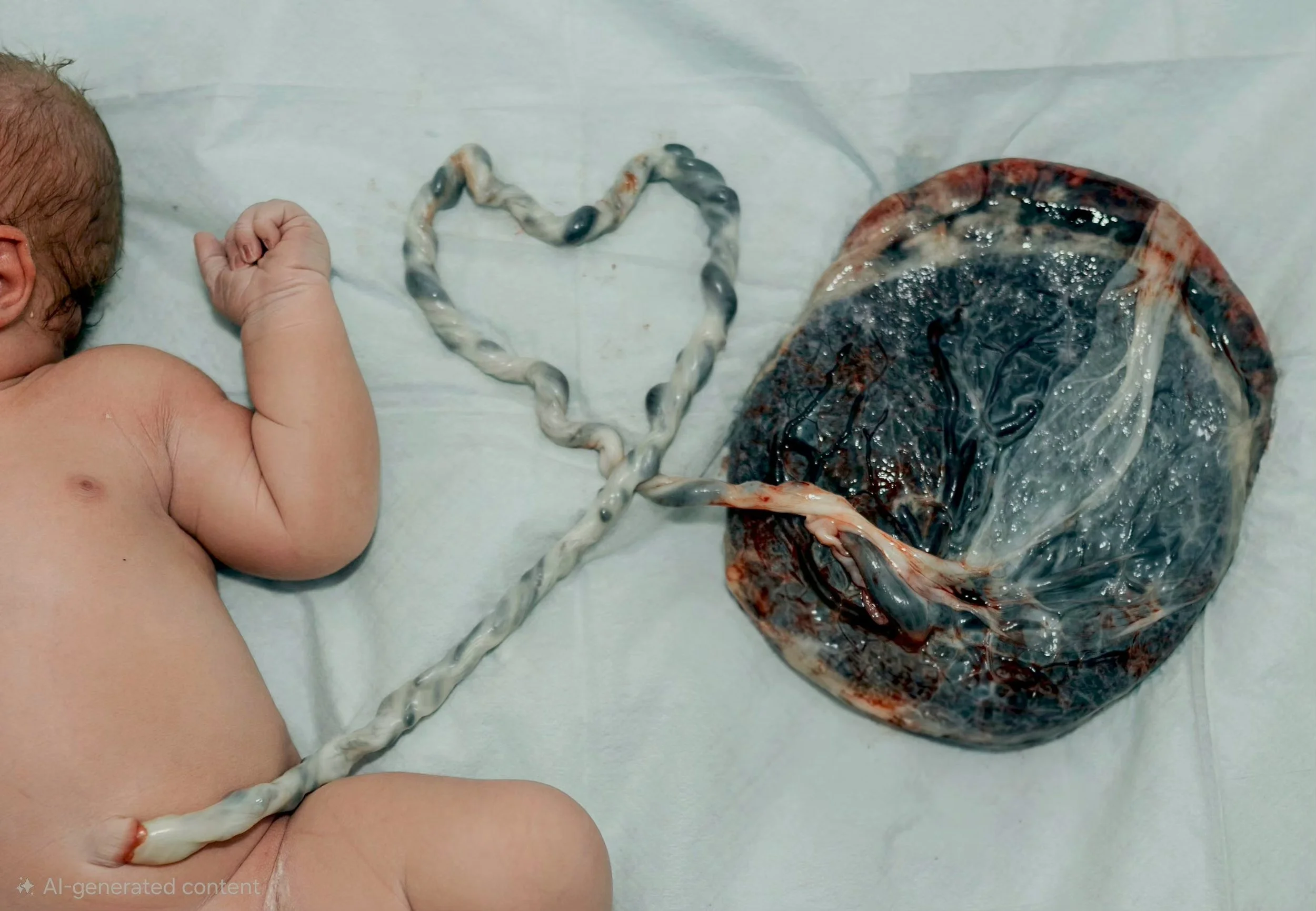
Images By Melanie Amparo Photography
Why I Talk About the Pelvic Floor So Much
If you've been one of my clients, you've probably heard me talk about your pelvic floor.
Maybe more than once.
As a midwife, one of the things I've become increasingly passionate about over the years is pelvic floor health. I've had the privilege of working alongside many incredible pelvic floor physical therapists, and if there's one thing I've noticed, it's this:
I have never had a client tell me they regretted seeing a pelvic floor therapist during pregnancy or after birth.
I have, however, cared for many women who wished they hadn't waited.
For many women, the pelvic floor doesn't become something they think about until after they've had a baby, when they're leaking urine, dealing with pelvic pain, feeling pressure or heaviness, or struggling to return to the activities they love.
The truth is, your pelvic floor is so much more than just your bladder.
It is a group of muscles that supports your pelvic organs, works together with your abdominal muscles and diaphragm, helps stabilize your core, and plays an important role in pregnancy, birth, and postpartum recovery.
During pregnancy, your pelvic floor can influence your posture, movement, comfort, and even how your body creates space for your growing baby. I've seen pelvic floor therapists identify muscle tension, asymmetries, and movement patterns that may be contributing to discomfort or making it harder for a baby to settle into an ideal position. While every pregnancy is different, addressing those issues has, in some cases, helped create more favorable conditions for fetal positioning.
I've also witnessed pelvic floor therapists become an incredible part of a birth team. In situations involving prolonged prodromal labor or slow labor progress, I've seen their hands-on techniques and movement strategies help women relax, improve comfort, and support labor in ways that have been truly remarkable.
And then there's pushing.
Many people assume that preparing for birth means strengthening the pelvic floor. In reality, many women actually need to learn how to relax it.
Birth isn't simply about having strong muscles. It's about having muscles that know how to lengthen, coordinate, and work with your body.
That's one reason I often recommend birth preparation programs like Push Prep. Learning how to breathe, move, and coordinate your pelvic floor before labor can help women feel more confident, prepared, and connected to their bodies before birth.
The benefits don't end once your baby arrives.
Postpartum healing is about so much more than waiting six weeks for a checkup.
Pelvic floor therapy can help women recover from birth, address pelvic pain, improve core strength, support healing after tears, manage abdominal muscle separation (diastasis recti), improve bladder function, and help women return to exercise safely.
One of the biggest myths I hear is:
"It's normal after having kids."
It's true that many women experience leaking when they cough, sneeze, or laugh. Back pain, pelvic pressure, painful intercourse, abdominal separation, and feelings of weakness are also common.
But common does not necessarily mean normal.
Many of these symptoms can improve with proper evaluation and treatment.
I often tell my gynecology clients the same thing: your pelvic floor is not something to ignore. What may seem like a small inconvenience today can become a much bigger issue over time. Just because something is common doesn't mean you have to accept it as your new normal.
Pelvic floor therapy isn't only for women who have recently given birth.
It can benefit women during pregnancy, postpartum, after gynecologic surgery, throughout menopause, and even those who simply want to move through life with less pain and better function.
One of my favorite parts of being a midwife is connecting women with other professionals who are passionate about caring for them. We are fortunate to have some incredible pelvic floor specialists and resources in our community, and I've seen firsthand the difference they can make in pregnancy, postpartum recovery, and women's health. While this isn't an exhaustive list, these are some of the providers and resources I've recommended over the years:
• Elvie Pelvic Floor Trainer
• Pelvic Soul (Sujata Martin)
• The Blue Door Infant & Maternal Wellness (Alexis Hawks & Rachel Bender)
• Fourth Trimester Wellness (Rachel Madera)
• Bliss Pelvic Health (Chrissy Daigle)
• Potter Physical Therapy
• Pelvic Solutions
If you're pregnant, newly postpartum, or experiencing symptoms you've been told to "just live with," I encourage you to have a conversation with your provider about whether a pelvic floor evaluation may be right for you. You don't have to wait until something becomes severe to seek help.
Your pelvic floor deserves the same attention and care as every other part of your health. Sometimes one referral can change the way you experience pregnancy, birth, recovery, and even everyday life.

From PCOS to Pregnancy: The Journey That Changed My Practice
If you've spent any time with me during a prenatal visit, you've probably noticed that I like to talk about more than just your baby's growth or your blood pressure.
I ask about nutrition, sleep, stress, movement, and the products you use in your home. I want to know how you're feeling as a whole person, not just how your pregnancy is progressing.
That wasn't always my approach.
Like many women, I spent years dealing with irregular cycles. I have PCOS, and for a long time I accepted that unpredictable periods and hormonal symptoms were simply my normal. I never really stopped to ask why my body was struggling. I just assumed this was something I would have to live with.
Eventually, my curiosity got the best of me.
I started asking different questions. Instead of wondering how to manage my symptoms, I wanted to understand why they were happening in the first place. That led me down a path of learning about hormonal health, nutrition, inflammation, and endocrine disrupting chemicals found in many of the products we use every day.
The more I learned, the more I realized how connected everything really is. Our hormones don't exist in a vacuum. They respond to what we eat, how we sleep, how we manage stress, how we move our bodies, and the environment we live in.
I began making changes in my own life, not because I was chasing perfection, but because I wanted to better support my body. I started paying closer attention to the foods I was eating, the products I was bringing into my home, and the daily choices that can influence our health over time. I quickly realized there was so much about women's health that I had never been taught.
That journey changed more than my own health. It changed the way I practice as a midwife.
Pregnancy is often viewed as a series of appointments, lab work, and ultrasounds. Those things are incredibly important, but they're only one piece of the picture.
I don't believe pregnancy begins the day you see two pink lines. Pregnancy is built on the health of a woman's body long before conception, and that foundation continues to matter throughout pregnancy and into the postpartum period.
As a Certified Nurse Midwife, I believe in evidence-based care. I also believe there is value in asking deeper questions and looking at the whole person. Every woman comes into pregnancy with her own health history, nutritional status, lifestyle, stressors, and environment. Those pieces deserve thoughtful consideration because they all play a role in supporting a healthy pregnancy.
This philosophy has naturally become part of the care I provide. During prenatal visits, I enjoy having conversations about nutrition, lifestyle, stress management, and environmental exposures alongside the standard prenatal care that every pregnancy deserves. My goal isn't to overwhelm families or expect perfection. It's to provide education so women can make informed choices that fit their own lives.
My interest in hormonal health eventually led me to become certified in integrative gynecology. That education has expanded the way I approach women's health and reinforced something I already believed: caring for women means looking beyond individual symptoms and considering the whole person.
One thing I've noticed is that we spend months preparing the nursery, researching strollers, and choosing the perfect baby gear, but we often spend very little time preparing the mother's body for pregnancy or thinking about what she will need after birth.
Mothers deserve that same level of preparation and care.
Whether you're planning a home birth or simply looking for a provider who values whole-body health alongside excellent prenatal care, I hope you know there is space for these conversations. You don't have to have all the answers, and you certainly don't have to be perfect. My role is to walk alongside you, provide evidence-based care, and help you make informed decisions that support both you and your growing family.
Because caring for a pregnancy starts with caring for the woman carrying it.

What Is a Water Birth?
Water birth is a birth option where labor and sometimes delivery take place in a warm tub of water. Many families are drawn to water birth because of the comfort, calm, and sense of ease it can provide during labor.
How water birth works
During a water birth, the mother labors in a tub filled with warm water that is carefully maintained at a safe and comfortable temperature. Some choose to enter the water during active labor, while others remain in the tub through the actual birth.
If the baby is born in the water, they are gently brought to the surface right away for their first breath. Throughout the process, the midwife provides close monitoring to ensure safety for both mother and baby.
Benefits of water birth
Many families choose water birth for reasons such as:
Increased comfort and pain relief during labor
Greater freedom of movement and positioning
A calming, private environment
Reduced need for medication for pain relief for some women
A sense of relaxation that may support labor progression
What does the research say?
Current research suggests that water immersion during labor and water birth are safe options for many low-risk pregnancies when appropriate screening and monitoring are in place.
Large systematic reviews have found no increase in maternal infection, postpartum hemorrhage, neonatal infection, NICU admission, or neonatal mortality compared with land birth.
Studies also consistently show benefits such as reduced pain, decreased use of epidural anesthesia, and higher maternal satisfaction. Some research suggests that labor in water may shorten the first stage of labor, although findings on total labor duration vary.
Overall, evidence supports water birth as a reasonable option for appropriately selected low-risk pregnancies when practiced with trained clinical oversight.
Safety considerations
Water birth is generally offered for low-risk pregnancies. During prenatal care and labor, the midwife carefully evaluates health history, pregnancy progress, and labor status to determine whether water birth remains a safe option.
There are times when a change in plan is needed and labor may need to continue outside of the water for closer monitoring or other clinical reasons. Safety is always the priority.
What it feels like
Many women describe water birth as deeply calming and supportive. The warmth of the water can help ease tension, promote relaxation, and allow for more freedom of movement during contractions.
Every birth experience is unique, but many families report feeling more relaxed and grounded in the water.
Is water birth right for you?
Water birth is one of several options available in midwifery care. It is not required, and it is not the right choice for everyone. The decision depends on your preferences, your health, and how your pregnancy progresses.
During prenatal care, we discuss your options in detail so you can make informed choices that feel right for you and your family.
If you are interested in water birth, we can talk through whether you may be a candidate and what that experience could look like in your care.
My Story
I was born in Florida and grew up as a middle child. When I was six years old, my mother gave birth to my little sister in a birthing center in Lakeland, Florida. I still remember sitting in my grandmother’s lap, watching in awe, not just of my mother, but of the midwives themselves. Their calmness, their steadiness, and the peace they brought into such a sacred and intense moment stayed with me in a way I did not fully understand at the time.
When I was eight, my family moved to northeast Alabama to be closer to my father’s side of the family. It was there that my passion for caring for others began to grow. I was drawn to nursing and to walking with people through different seasons of life.
I went on to nursing school and began my career in medical surgical nursing, eventually moving into the emergency room. It was in the ER that I met someone who would quietly change the course of my life. Her name was Rachel. She was working toward becoming a midwife through Frontier Nursing University, and she introduced me to a path I had not fully considered for myself.
At the time, becoming a midwife did not feel like a realistic option. Midwifery was not widely accepted where I lived in Alabama, and it felt distant and uncertain. But Rachel encouraged me to pursue it anyway, and I believe now that was part of God’s guidance in my life.
I eventually applied, was accepted, and transitioned my nursing work into mother baby and labor and delivery. I spent five years in OB, gaining experience in both high risk and low risk care. I learned not only the clinical side of birth, but also the importance of presence, timing, and trust in the process.
My clinical training took me into many different settings. I began in Nashville, Tennessee, working with a home birth practice while still building my required experience and hours. From there, I trained in Lawrenceburg, Tennessee, where I worked alongside CPMs serving the Amish community. I saw true collaboration there, especially when hospital transfer was needed and care continued seamlessly.
In Columbia, Tennessee, I was exposed to high risk OB in a way that sharpened my skills and required me to be steady, alert, and responsive in urgent situations.
I then trained in Birmingham, Alabama, in a hospital based midwifery model that still reflected the kind of birth space I believe in, where midwifery and medicine can work together with respect. There I learned how powerful it can be to step back, trust physiology, and allow birth to unfold when it is safe to do so. I was only there for a short time before my student placement ended, and I suddenly had nowhere to go.
In what I can only describe as God’s provision, a midwife in Davenport, Florida reached out and accepted me as a student so I could complete my final births. This meant being away from my husband and children, but my family supported me fully. I stayed with my aunt and uncle in Florida and finished my clinical journey, catching my 40th baby just before graduation. I was deeply grateful, and also very ready to be home with my family.
I was offered a job at that same practice. After prayer and discussion with my family, we felt led to take the next step together.
Then COVID changed everything.
Just as we were preparing to move forward, I received an email saying the offer had been rescinded due to low census. At the same time, our home in Alabama was under contract, my husband had already secured work in Florida, and I had stepped away from my RN position. Everything was moving at once, and suddenly everything felt uncertain.
We chose to move forward in faith anyway, trusting that God had a plan even when we could not see it.
I came to Florida on a travel RN contract and worked for 14 weeks before transitioning into midwifery practice in St. Petersburg. I always knew I wanted to move out of the hospital setting, but like many new midwives, the path required patience, humility, and growth.
Eventually, I accepted a hospital based midwifery position, continuing to gain experience while holding onto the calling I felt toward out of hospital birth.
That opportunity eventually led me to Labor of Love Birth Center. In a full circle moment, I realized this was the same name as the birth center in Lakeland where my little sister was born all those years ago.
It felt like returning to where everything began.
At Labor of Love, I finally stepped back into the world of out of hospital birth. It was meaningful, grounding work, and the relationships built there were deeply special. But like many birth centers, financial instability eventually led to its closure. Saying goodbye was incredibly hard. It was more than a workplace. It was a community and a home.
That ending became a new beginning.
I realized it was time to step into something I had been moving toward for years, creating my own practice.
Living Waters Midwifery was born out of that season, out of years of training, transition, loss, growth, and faith. It is the culmination of every place I trained, every family I served, every mentor who shaped me, and every birth that changed me.
I am so grateful to now offer care in this way, and even more grateful for the families who will allow me to walk with them through pregnancy, birth, and beyond.
This is just the beginning of the story I get to keep writing with you.